Books
Forthcoming from Duke University Press in Spring 2027
How Color Became a Technology: The Making of Chromatic Capitalism
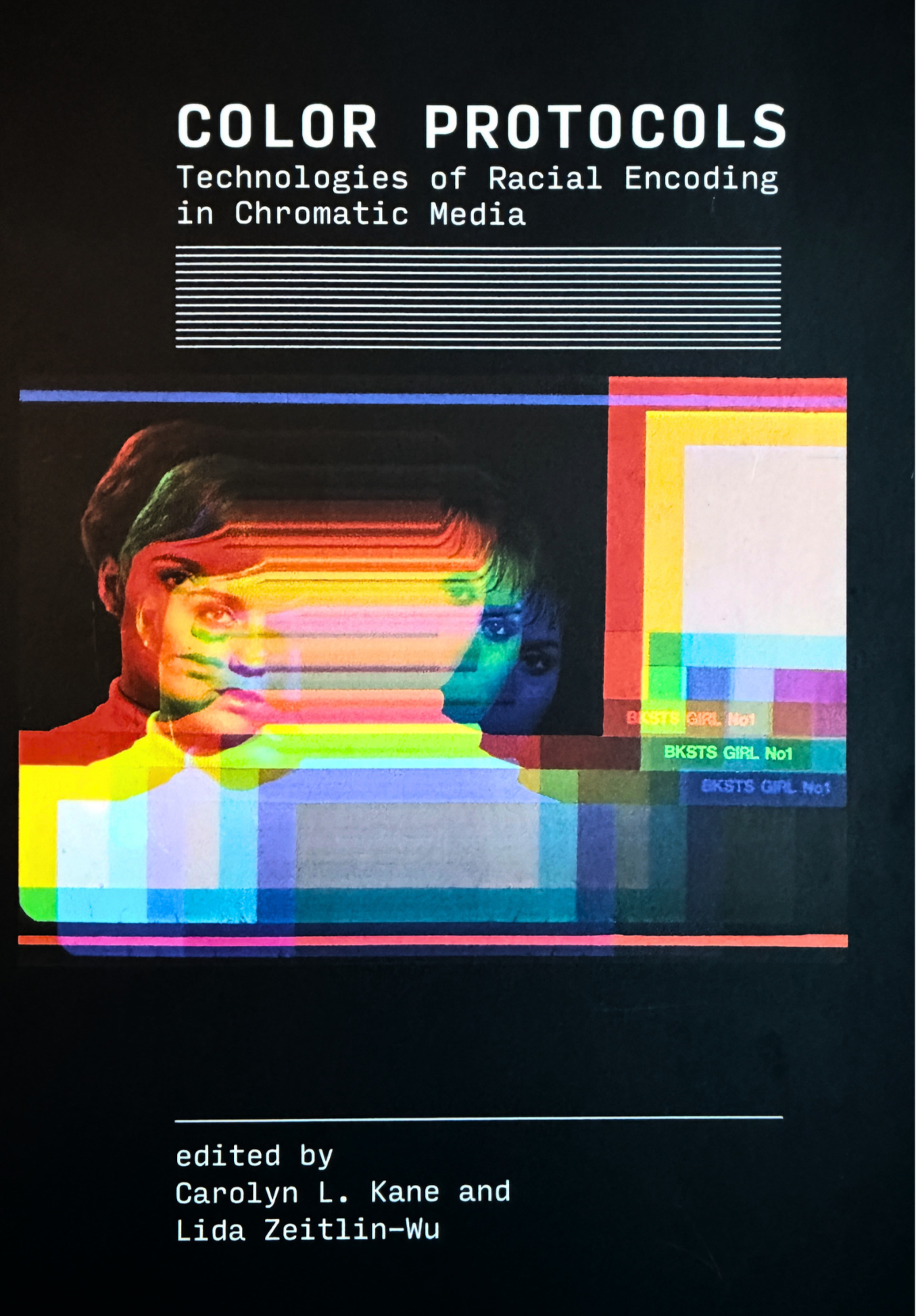
Color Protocols: Technologies of Racial Encoding in Chromatic Media
MIT Press (2025) - Edited by Carolyn L. Kane and Lida Zeitlin-Wu
An edited volume that explores how color intersects with problematic histories of racial encoding in linguistic, visual, and algorithmic media.
What is at stake when categories like color, race, and ethnicity are transformed into a common language, lexicon, or industry standard? And more critically, how can we avoid the epistemic and ontological violence that seems inevitable in organizing color into a series of grammars, syntaxes, indexes, and protocols? Color Protocols offers a series of responses to these questions and others. It begins with the premise that color is central to the history of systemic racism, and in turn, that the encoding of race vis-à-vis color is an intrinsic aspect of chromatic technologies.
The book’s 18 curated essays, edited by Carolyn Kane and Lida Zeitlin-Wu, are written by scholars from across the arts, social sciences, and humanities. Each section contains both original essays and republished excerpts fundamental to understanding how the history of color technology and its racialized double-valences have played out across multiple fields and media platforms over the last century and a half.
Contributors: Ruha Benjamin, Jianqing Chen, Anne Anlin Cheng, Frederick Douglass, W. E. B. Du Bois, Richard Dyer, Ali Feser, Nicholas Gaskill, Quran M. Karriem, Michael Keevak, Lisa Nakamura, Tina Post, Aileen Robinson, Michael Rossi, Lorna Roth, Amber Sweat, Genevieve Yue
Essays & Articles

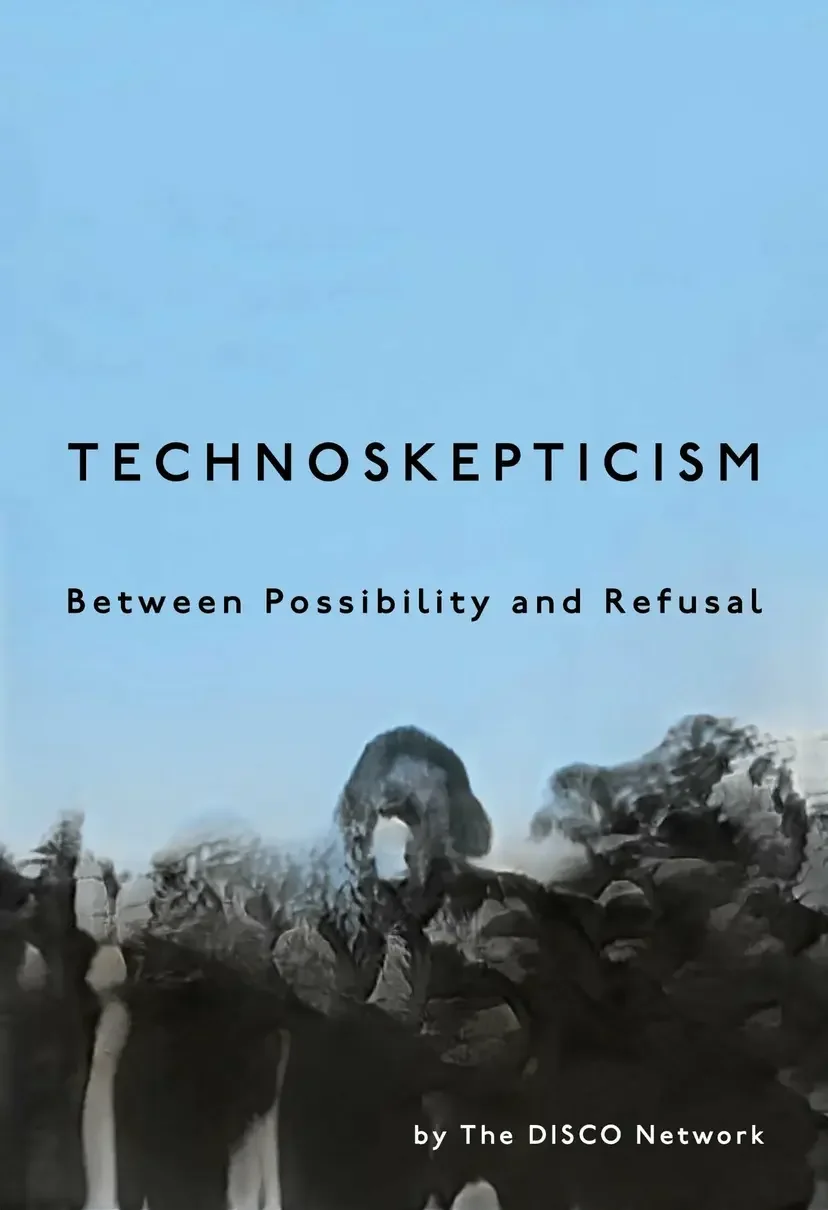
Technoskepticism: Between Possibility and Refusal
Stanford University Press (2025) - by The DISCO Network
From Munchausen by Tiktok to wellness apps to online communities to AI, the DISCO Network explores the possibilities that technoskepticism can create.
This is a book about possibility and refusal in relation to new technologies. Though refusal is an especially powerful mode—particularly for those who have historically not been given the option to say no—people of color and disabled people have long navigated the space between saying yes and saying no to the newest technologies. Technoskepticismrelates some of these stories to reveal the possibilities skepticism can create.
The case for technoskepticism unfolds across three sections: the first focused on disability, the creative use of wellness apps, and the desire for diagnosis; the second on digital nostalgia and home for Black and Asian users who produced communities online before home pages gave way to profiles; and the third focused on the violence inherent in A.I.-generated Black bodies and the possibilities for Black style in the age of A.I. Acknowledging how the urge to refuse new technologies emerges from specific racialized histories, the authors also emphasize how care can look like an exuberant embrace of the new.


Post45 Journal (2026)
Adobe users awoke on August 16th, 2022, to an undesirable ultimatum. Due to a licensing dispute between Adobe and Pantone, users now had to pay fifteen to twenty dollars a month and download a separate plug-in called Pantone Connect if they wanted to access Pantone colors in Photoshop, InDesign, or Illustrator. Otherwise, all 15,000 Pantone colors, even in older files, would be replaced with Adobe's default black (Figure 1). To add insult to injury, Adobe Creative Cloud subscription fees, sans Pantone palettes, were increasing, pointing to a growing tendency for companies to offload the cost of previously included services onto consumers. In protest, Stuart Semple, the English prankster artist — who is perhaps best known for his ongoing public feud with internationally renowned sculptor and installation artist Anish Kapoor over the proprietary pigment Vantablack— posted a video saying he was "utterly raging" and "at the end of my tether with these colour criminals and what they've been up to — it's diabolical."In protest, Semple created a free Adobe plugin called Freetone (Figure 2), available for download via his online art supply store, Culture Hustle.
Los Angeles Review of Books (2026)
WHITE REPELS. White attracts. White is muted. White is blinding. White is not a color. White is the combination of all colors. White is a racial descriptor that postures as the absence of race: a blank slate onto which difference can be projected, made visible, and felt.
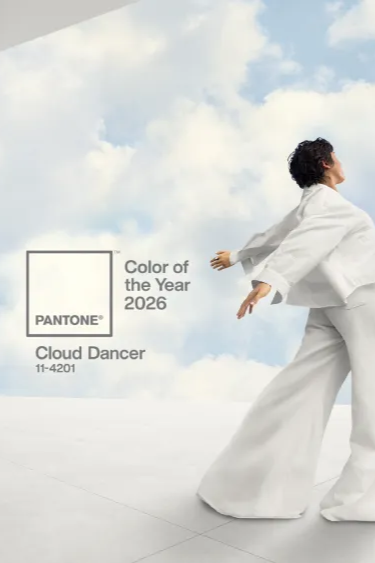
These are just a few of the many paradoxes surrounding white, which has never—until now—been selected as international color corporation Pantone’s Color of the Year. The 2026 Color of the Year is officially designated as Cloud Dancer, “a lofty white whose aerated presence acts as a whisper of calm and peace in a noisy world.” Pantone is selling us a white fantasy.
Visual Studies (2025)
This article investigates the recent fusion of AI colourisation with genealogy and ancestry databases to offer a set of reflections on this nascent technology. Combining humanistic approaches from film and media studies, science and technology studies, critical race studies, and visual and material culture, it attempts to disentangle the political, technical, and aesthetic concerns that arise when the achromatic past becomes the colourised present through machine vision. After tracing the computational origins of colourisation, the article reveals how deep learning-based colourisation tools mark a rupture in the way the machine ‘senses’ colour, where the logic of pattern recognition and classification overrides epistemologies of sensory perception. The final part of the essay turns to the racialised role colourisation occupies on genealogy platforms, arguing that such databases naturalise the historically fraught relationship between colour as both race and hue. Across these three sections, colour is at the centre of these questions of subjectivity, personhood, and technologically mediated ways of seeing. It remains the vexed and ambivalent site to which meaning adheres.
Just Tech (2023)
This field review provides a critical history and overview of the two most popular for-profit meditation apps, Calm and Headspace, which have seen a dramatic uptick in downloads in the wake of Covid-19. I use these apps as case studies to critique what is sometimes called the “wellness-industrial complex”: the multibillion-dollar industry that caters to overwhelmingly white and affluent consumers, often through the appropriation and decontextualization of non-Western spiritual and medicinal practices. As I argue, wellness apps look, sound, and move in a way that claims to be deracinated, but in fact capitalize on a disembodied form of default whiteness by framing personal wellbeing as a fundamentally apolitical enterprise. By looking to the visual, haptic, and auditory design of for-profit meditation apps—and the normative racialized, class-based, and gendered markers they enforce—I show how a sanitized version of “Eastern philosophies,” particularly Zen Buddhism, have become an alibi for the large-scale abandonment of care for those who need it the most. I conclude with some alternative possibilities for how meditation apps might approach the question of wellness by ceasing to erase the political realities of the world.
Camera Obscura (2023)
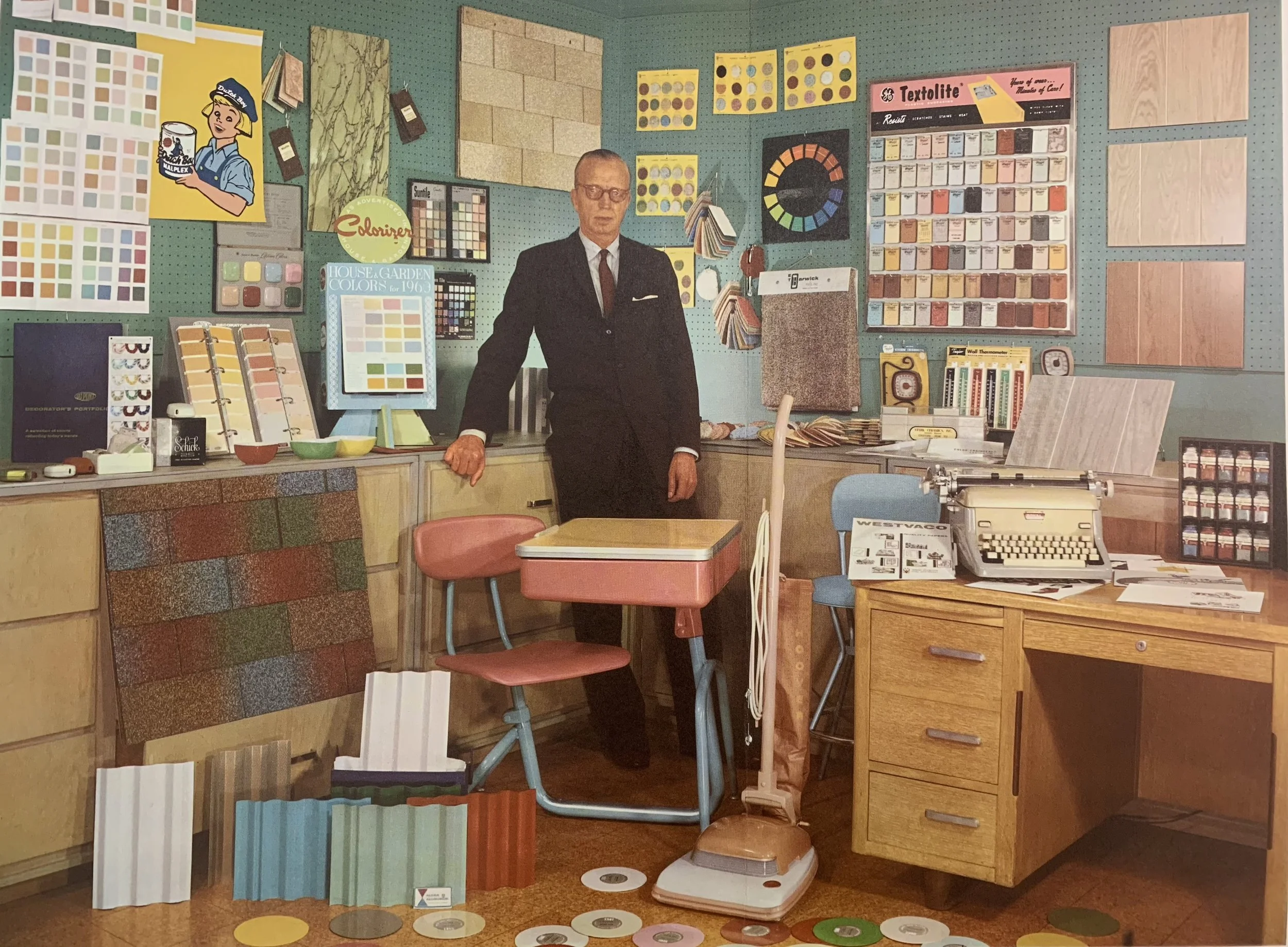
The postwar era in the United States saw an explosion of mass‐produced colors across a range of materials and technologies, as well as increased demand for professional color consultants both within and outside the home. While this period (sometimes called the color revolution) is typically viewed as catalyzing new possibilities for self‐expression, this rhetoric of consumer choice in fact served to naturalize existing social hierarchies and normative modes of vision through standardized color. This article looks to the postwar American domestic interior to dissect a historical moment when color, divided into serialized paint swatches, became grid‐like, quantitative, and severed from form. It examines several key shifts in the conceptualization of standardized color in the postwar period, particularly as they played into identity formation along racial, class‐based, and gendered lines. Analyzing popular archival materials such as paint catalogues and women's magazines alongside the writings of the prominent color consultant Faber Birren (1900 – 1988), the article contends that it was in the midcentury domestic interior that the cultivation and commodification of personality became synonymous with technological and social advancement. Though color consultants emphasized that the home was a space for individual consumers to assert their uniqueness through color customization, this so‐called freedom of choice in fact rendered gender, race, and class subject to further standardization and classification in the name of social and technological “progress.”